
Basements are rare in the Tri-Cities, so water from a leak doesn't collect somewhere obvious. It spreads sideways under flooring, drops into the crawl space, soaks into the wall behind a fixture, or pools on top of a ceiling. Knowing where it goes in local houses helps you catch a leak early, and helps you understand why a contractor wants to look in places that seem unrelated to the spill.
A Map of the Hiding Places
| Hiding place | What sends water there | How to check |
|---|---|---|
| Crawl space | Supply-line breaks, water heater leaks, toilets, yard irrigation | Flashlight from the access hatch: pooled water, sagging or dark insulation, musty smell |
| Under laminate or vinyl plank | Dishwasher, fridge line, washer, toilet | Seams lifting, a soft or hollow feel, edges cupping |
| Under kitchen cabinets | Sink drain, dishwasher, ice-maker line | Swollen toe kick, a damp smell when the sink cabinet opens |
| Wall cavity behind the shower | Shower valve or drain leaks | Loose tile, cracked grout, stains on the far side of the wall |
| Between floors | Upstairs bathrooms and laundry rooms | Stains or bubbling paint on the ceiling below |
| Garage slab edge | Water heater, washer, irrigation | Damp baseboard or drywall in the room next to the garage |
| Attic | Air handler condensate (cooler and AC leaks), attic water heater, roof at the eaves | Stains on the top-floor ceiling; damp insulation |
| Under a manufactured home | Supply lines in the belly | Sagging belly board, damp skirting area |
Why Doesn't the Water Show Up Where It Started?
Because water follows gravity and the path of least resistance, and houses are full of hidden paths: along the top of a subfloor under flooring, down the inside of a wall cavity, along a joist, across a slab. A washer hose that fails upstairs can show up as a ceiling stain two rooms away. A water heater in the garage can soak the bedroom carpet on the other side of the wall. That's why moisture mapping comes before tear-out.
The Crawl Space Gets Special Attention
Most water damage in older Tri-Cities homes ends up here. Water pools on the vapor barrier, the insulation in the floor above soaks it up, and humidity under the house rises. It can sit for days or weeks before anything shows upstairs: maybe a musty smell from the floor registers, maybe floors that feel softer. Twice a year, and after any leak upstairs, take a look from the hatch. See Alphabet Houses and mid-century plumbing for more on older homes.
Clues You Can Check Without Tools
- The water meter test. Turn off every tap and appliance, note the meter, wait an hour. If it moved, water is going somewhere.
- Your nose. A musty smell that's strongest near one cabinet, closet or register is pointing at something.
- Your feet. Soft spots, bounce or uneven flooring.
- Paint and caulk. Bubbling paint, cracked caulk lines and baseboards pulling away from the wall.
- The well pump, on rural properties: if it cycles with everything off, there's a leak.
What a Contractor Uses
Moisture meters read inside drywall, wood and flooring; thermal imaging shows damp areas as cooler patches behind walls and ceilings. Together they map where the water went without opening more of the house than necessary. Then the drying plan follows the map. See drying & restoration.
Around the Area
Crawl-space hiding places dominate in central Richland, Benton City and older Kennewick neighborhoods. Between-floor leaks are the common surprise in newer two-story homes in South Richland and Pasco. The main page covers the rest: water damage in Richland.
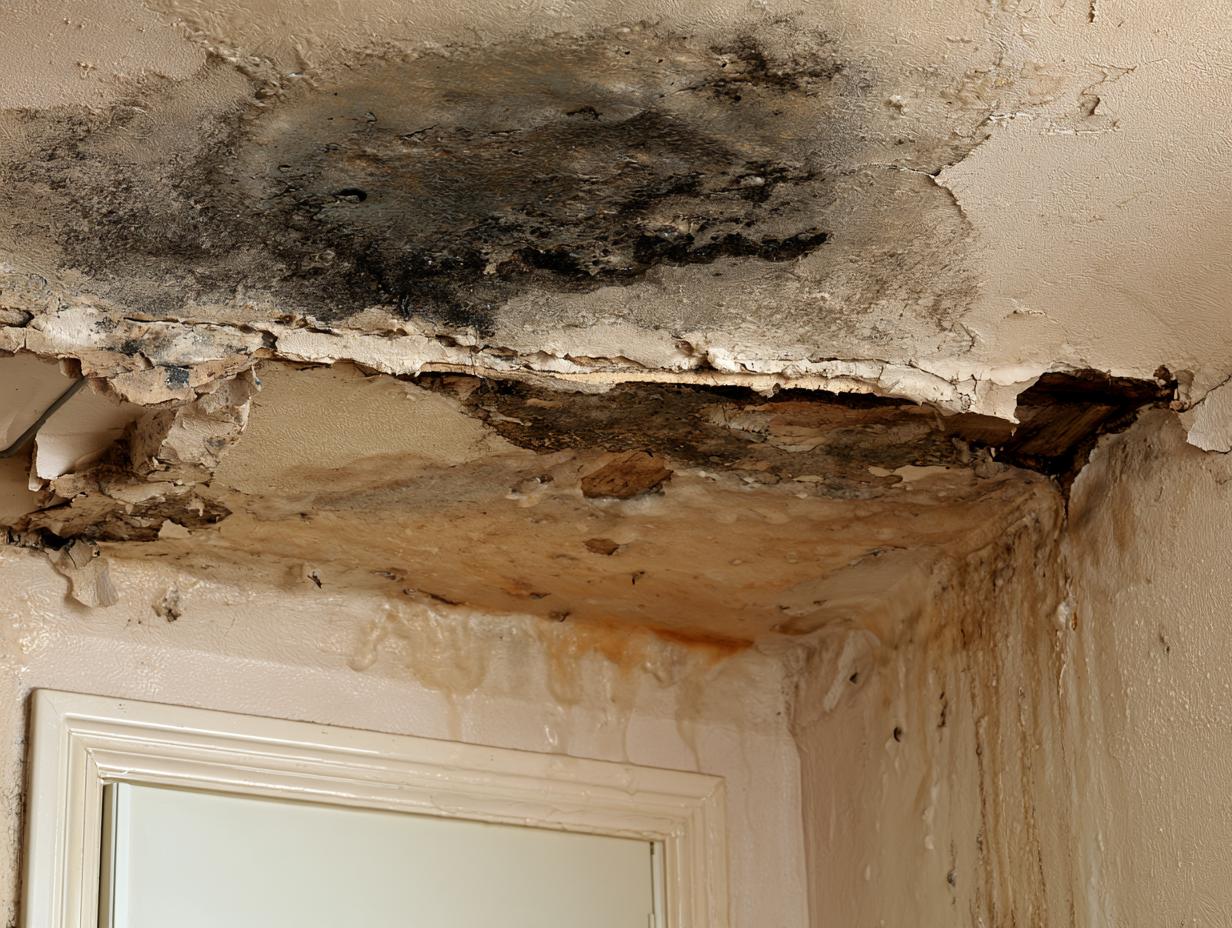
Why Dry-Climate Homes Still Get Mold After a Leak
Low humidity outside doesn't dry a soaked subfloor.
Irrigation and Sprinkler Line Breaks Near the Foundation
How a yard leak ends up under the house, and what to check.