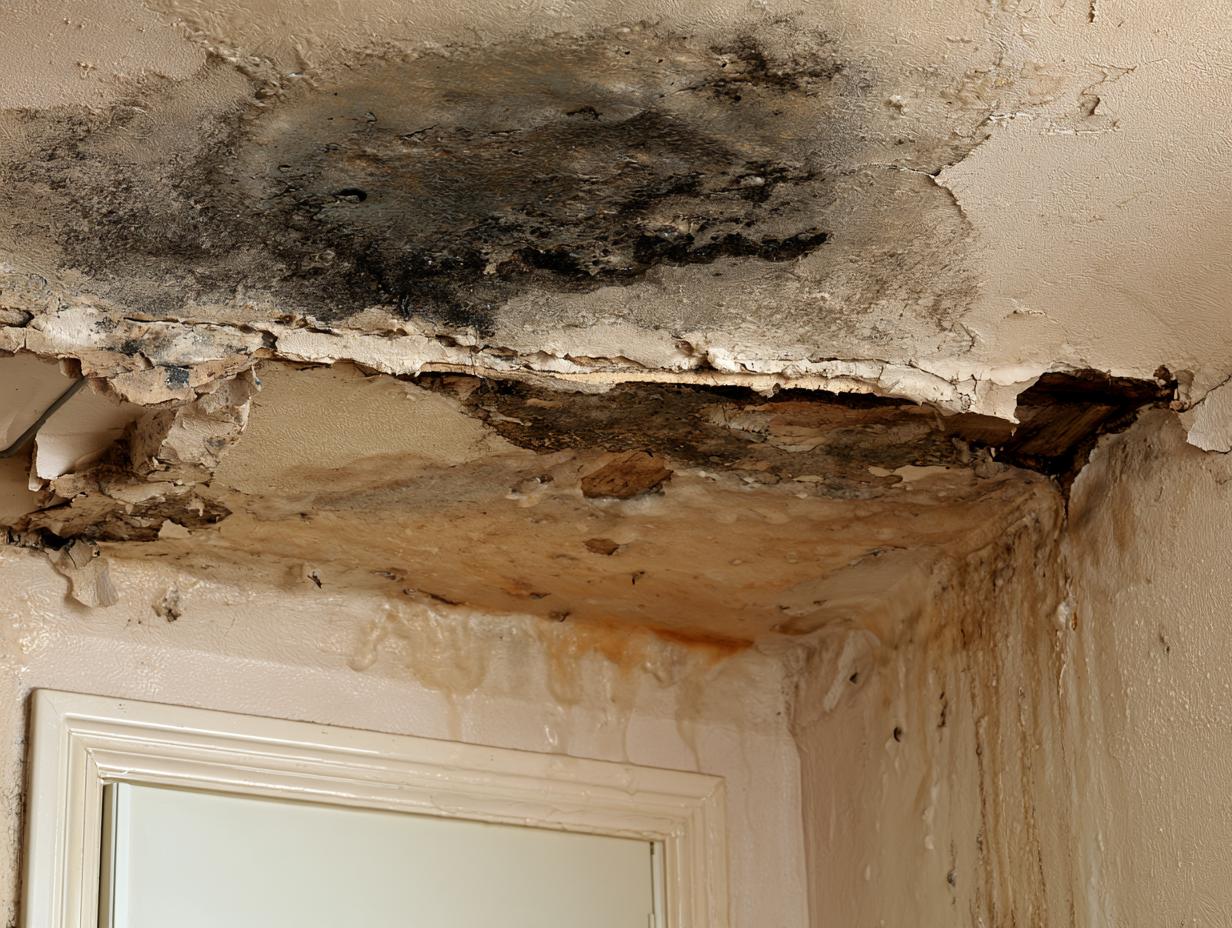
Tri-Cities summers are long, hot and dry, and cooling equipment works hard for months. Both kinds, evaporative (swamp) coolers and refrigerated air conditioners, handle water, and both can put it where it doesn't belong: into a ceiling, a closet or an attic. These leaks tend to be slow and quiet, which is what makes them expensive.
How Swamp Coolers Leak
An evaporative cooler pumps water over pads and blows air through them. Most sit on the roof or on a stand beside the house, with a duct into the ceiling. Water gets loose when:
- The float valve sticks and the pan overflows.
- The pan rusts through, common on older metal units.
- The supply line cracks, often where it runs across the roof.
- Water blows down the duct when pads are clogged or the unit is out of level.
- The unit isn't drained in fall, and freezing water splits the line or pan.
The first sign inside is usually a stain on the ceiling around the cooler vent, or water dripping from the vent itself.
How Air Conditioners Leak
Refrigerated AC pulls moisture out of the air as it cools, and that condensate has to drain away, usually through a small pipe to the outside or into a drain. When the line clogs with algae, dust or debris, the water backs up. If the air handler is in an attic, the overflow goes into the ceiling below; if it's in a closet, into the floor and walls around it. Many systems have a secondary pan or a float switch that shuts the unit off when water backs up. If yours keeps shutting off on hot days, check the drain.
What Are the Warning Signs of a Cooling-System Leak?
Brown rings or bubbling paint on the ceiling directly under the cooler duct or attic air handler, water dripping from a supply vent, a musty smell when the cooling first kicks on, damp carpet or baseboards around an indoor air handler closet, and an AC that shuts itself off repeatedly. Any of these means the water is already in the building materials.
Seasonal Care That Prevents Most of It
| When | Swamp cooler | Air conditioner |
|---|---|---|
| Spring start-up | Clean the pan, replace pads, check the float and the line on the roof | Flush the condensate line; check the drain pan under the air handler |
| Mid-summer | Look at the ceiling under the duct; check the pads | Watch for shut-offs; look at the ceiling under an attic unit |
| Fall shut-down | Drain the pan and line, shut the supply, cover the unit | Nothing special, but note any summer stains |
A cup of white vinegar poured into the AC condensate line's access port in spring helps keep algae down; follow the manufacturer's guidance for your system.
Is Condensate Water Clean?
Mostly. Condensate and cooler water are usually treated like clean water (Category 1) if caught quickly. But water that sat in a cooler pan or drain pan for weeks can carry algae and bacteria, and anything that soaked insulation or drywall for days often needs removal and treatment rather than drying alone. See the water damage glossary for the categories.
Cleaning Up After a Cooling Leak
- Turn off the unit and, for a cooler, its water supply.
- Check the attic or ceiling for pooled water on top of the drywall; keep people out from under a sagging section.
- Get the wet insulation and drywall assessed with a moisture meter.
- Dry it properly. Wet attic insulation and ceiling drywall don't dry on their own in a closed space, even in summer heat.
The drying side is covered on drying & restoration, and other appliance failures on water heater & appliance leaks.
Around the Area
Rooftop coolers are most common on older homes in central Richland and Kennewick, while newer homes in South Richland and Pasco mostly run central air, often with attic or closet air handlers. Rural homes around Prosser and Benton City have the same mix. More local detail is on the water damage in Richland page.
A Month-by-Month Water Damage Calendar for the Tri-Cities
What tends to go wrong each season, and the five-minute check that heads it off.
Where Water Hides in Tri-Cities Homes
Crawl spaces, slab edges, wall cavities and attics: where leaks go unseen.